
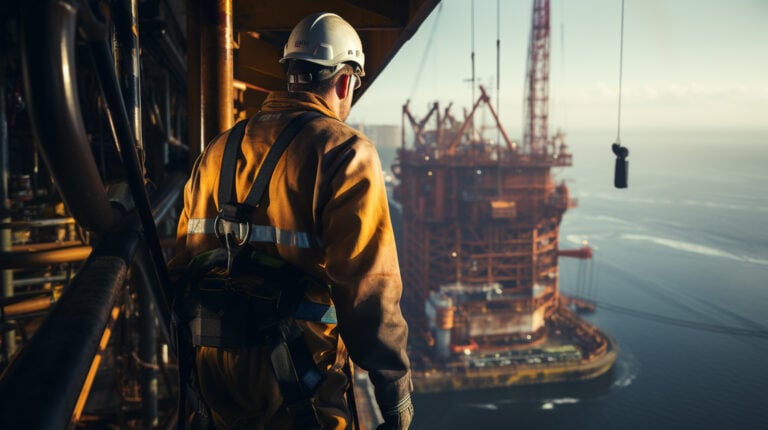
Equipment failure injuries occur when offshore machinery, such as cranes, winches, hydraulic systems, or drilling equipment, breaks down due to poor maintenance, mechanical defects, or unsafe operation. These injuries are often severe and are frequently preventable under maritime safety standards.
This guide covers common equipment failure injuries offshore, the risks they pose, and what to do after a maritime accident in the Gulf of America.
What Hazards Cause Equipment Failure Injuries Offshore?
Heavy machinery is essential to offshore work, but when equipment fails, the results can be catastrophic. Unsafe working conditions, inadequate maintenance, or defective machinery commonly cause equipment failure injuries offshore. The most frequent causes include:
- Crane and hoist failures caused by overloading, worn cables, or improper rigging
- Hydraulic line failures that release high-pressure fluid
- Unsecured or shifting loads due to improper rigging
- Poor maintenance and inspections, including corrosion and saltwater damage
- Defective equipment components, such as faulty winches, valves, or control systems
What Injuries Are Commonly Caused by Equipment Failures?
Equipment failure injuries offshore are often serious and life-altering. Common injuries include:
- Crush injuries
- Amputations
- Severe burns
- Traumatic brain injuries (TBIs)
- Fatal injuries
Many of these injuries prevent seamen from returning to offshore work.
Who Is Responsible for Equipment Failure Injuries Under Maritime Law?
Under the Jones Act, maritime employers are responsible for providing a reasonably safe workplace. If an employer’s negligence contributed to an equipment failure, an injured seaman may pursue compensation.
If defective machinery or components caused the injury, a product liability claim against the manufacturer or supplier may also apply in addition to a Jones Act claim.
What Are Employer Duties to Prevent Maritime Injuries?
Maritime employers must take reasonable steps to prevent equipment-related injuries, including:
- Regularly inspecting and maintaining all machinery
- Training crew members in safe equipment operation and rigging
- Following lockout and tagout safety procedures
- Replacing worn or defective parts promptly
- Keeping accurate maintenance and inspection records
Failure to meet these duties can expose employers to liability under maritime law.
What Should You Do After an Equipment Failure Injury Offshore?
If you are injured due to equipment failure offshore, taking immediate action can help protect your health and legal rights:
- Report the equipment failure immediately
- Photograph the damaged equipment if it is safe to do so
- Gather the names of witnesses
- Seek medical care as soon as possible
- Contact Mike Brandner Law, a maritime injury lawyer, before providing statements or signing company paperwork
Contact Our Proven Equipment Failure Injuries Lawyer 24/7
This article is part of our Hazards Causing Offshore Injuries series, created to help seamen understand the causes of heavy machinery and equipment failure injuries and the legal rights available after a maritime accident. We hope this information helps you recognize equipment-related risks and know what steps to take if an injury occurs. If you or a loved one has been injured offshore and have questions about a Jones Act claim, maintenance and cure, or employer responsibility, the maritime attorneys at Mike Brandner Law are available to help.
Call (985) 345-1111 or (504) 345-1111, connect through LiveChat, or fill out a secure online form now to schedule a free consultation
The information on this blog is for general information purposes only. Nothing herein should be taken as legal advice for any individual case or situation. This information is not intended to create, and receipt or viewing does not constitute an attorney-client relationship.