
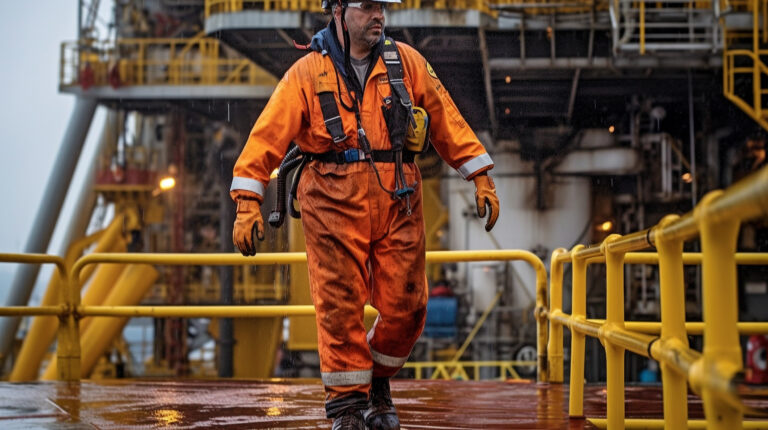
Working offshore means constant motion, and one slick deck can end a career. From oil residue to unsecured gear, slip, trip, and fall hazards cause thousands of offshore injuries each year. This offshore injury hazards guide explains the most common causes, the injuries they lead to, what to do after an accident, and how Mike Brandner Law helps injured offshore workers protect their rights.
Common Causes of Offshore Slips, Trips, and Falls
Offshore oil rig platforms, tugboats, and supply vessels operate in unforgiving conditions. Even with standard safety operating procedures in place, slip, trip, and fall accidents remain among the most common and preventable offshore injuries.
Slip-and-fall hazards offshore often stem from unsafe working conditions, poor maintenance, or inadequate safety practices. Common causes include:
- Oil and Grease Spills
Equipment leaks can create nearly invisible slicks on decks, stairs, and catwalks. - Sea Spray and Rain
Wet surfaces and a moving vessel can create hazardous conditions for a slip and fall. - Loose Cables and Tools
Poor housekeeping allows trip hazards to accumulate in walkways and work areas. - Poor Lighting
Night shifts, fog, and poor lighting can conceal hard to notice surface anomalies. - Improper Footwear or Gear
Non-slip boots and safety equipment reduce risk, but only when fitted correctly and maintained.
Injuries Often Caused by Offshore Slip and Fall Accidents
Slips, trips, and falls offshore frequently result in serious injuries, including fractures, back injuries, torn ligaments, concussions, and traumatic brain injuries. In severe cases, workers may fall overboard. Many of these injuries can be career-ending when balance, strength, or mobility is permanently affected.
Employer Responsibility Under Maritime Law
Under the Jones Act, employers are required to provide a reasonably safe workplace. You may be entitled to recover compensation if you are a seaman and your injury resulted from unsafe conditions, defective equipment, or insufficient training. This can include maintenance and cure for medical treatment and living expenses, pain and suffering, and lost wages.
What to Do after a Slip or Fall Caused by Offshore Injury Hazards
Taking the right steps immediately after an offshore accident can protect your health and your legal rights:
- Report the injury to your supervisor right away
- Request that the incident be documented in the vessel or platform report
- Get photos of where the accident happened if it is safe to do so
- Seek medical care as soon as you return to shore
- Contact Mike Brandner Law before signing any company paperwork
Get Trusted Guidance from an Offshore Injury Hazards Lawyer
This article is part of our Hazards Causing Offshore Injuries series, created to help seamen understand common dangers at sea and the legal rights available after an offshore accident. We hope this information helps you recognize risks, take safer actions, and know what to do if an injury occurs.
If you or a loved one has been injured offshore and have questions about a Jones Act claim, maintenance and cure, or an employer’s responsibilities, the maritime attorneys at Mike Brandner Law are here to listen, explain your options, and help protect your rights. Schedule a free consultation today to learn more about your legal options. Call (985) 345-1111 or (504) 345-1111, connect through LiveChat, or fill out a secure online form now.
The information on this blog is for general information purposes only. Nothing herein should be taken as legal advice for any individual case or situation. This information is not intended to create, and receipt or viewing does not constitute an attorney-client relationship.