
Delayed Medical Evacuation Offshore
If you were hurt offshore and the company kept you aboard instead of getting you to a doctor, you may have a claim for delayed offshore medical evacuation. Seamen have a right to prompt medical care. An employer can’t put off a needed medevac to save money or keep a job on schedule.
This article explains what your employer owed you and what you can do now to protect your claim.
Can You Sue Over a Delayed Medical Evacuation Offshore?
Yes, if you’re a seaman and the company’s delay made your injury worse. Under the Jones Act, your employer has to get you prompt, proper medical care. If it didn’t, it can owe you for the harm the delay caused. Lawyers often call this a “failure to evacuate injured seaman” claim. If you’re not sure you count as a seaman, here’s how seaman status works.
No matter who was at fault, your employer also owes you maintenance and cure. That means a daily living allowance while you heal, plus your medical care.

Free Case Evaluation
Complete the form below and a member of our legal team will contact you to discuss your case.
Your Employer’s Duty to Get You Real Care
Because a supply boat only has basic medical supplies, your employer has a strict legal obligation to get you real medical help when you’re badly hurt. A Jones Act delayed medical care claim for delayed medical care ultimately comes down to one question: Did the company handle your emergency reasonably based on what they knew at the time?
If the crew neglected to contact an onshore doctor, or if management ignored an order to evacuate you, document those details. That evidence is critical to proving your case.
How Medevacs Work in Louisiana and the Gulf
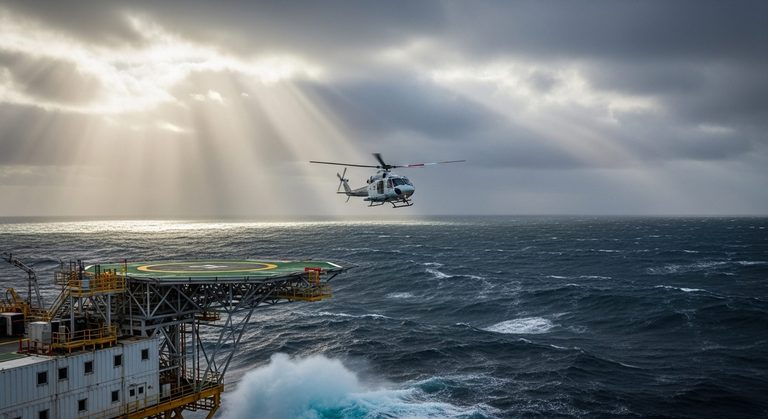
When someone suffers a serious injury offshore, the captain or company must arrange emergency medical transportation. Depending on the situation, that help may come from a private helicopter crew hired by an oil and gas operator or the U.S. Coast Guard. In the most serious emergencies, U.S. Coast Guard Sector – Heartland District can dispatch a crew from Air Station New Orleans in Belle Chasse.
These crews routinely respond to emergencies involving workers aboard vessels and offshore platforms along the Louisiana coast, including areas south of Port Fourchon.
Once a medevac is underway, getting the injured worker to medical care becomes the priority. In a 2025 case, a helicopter transported an injured worker from a deepwater platform to a heliport in Houma in less than 90 minutes.
When a medevac is delayed, the important question is why. Did someone wait too long to make the call? Did the company hesitate to arrange transportation? A delay in getting medical help can have serious consequences. Mike Brandner Law represents injured seamen throughout Louisiana, including New Orleans, Houma, and Thibodaux.
Weather Can Ground a Helicopter. A Budget Shouldn’t.
Some delays can’t be helped. A squall can close the airspace, and a pitching deck can make a boat-to-boat transfer too dangerous to try. That doesn’t let the company off the hook, though. Someone still has to keep you stable and stay in touch with a doctor ashore until the weather breaks.
What the law doesn’t excuse is delaying to save money or keep a project on schedule. When cost or convenience decides whether you get off the vessel, that’s offshore medevac negligence.

What a Delayed Medical Evacuation Offshore Can Cost You
Your employer is responsible for the harm a delay causes, which can include damages related to:
- A longer recovery or a bigger surgery
- A permanent injury that faster care could have prevented
- Lost wages and lost earning power if you can’t go back offshore
- Pain and suffering, including the time you spent waiting aboard
Under the Jones Act, a delay of care doesn’t have to be the only cause of your harm. You need to show the company’s carelessness played a part, even a small one. That usually takes a doctor who can explain how faster care would have helped.
A deliberate delay can cost the company more. If it knew you needed care and refused anyway, a court can order punitive damages on top of your other losses, plus your attorney’s fees.
How to Document a Delayed Medical Evacuation Offshore
Your claim depends on how long you waited and why. As soon as you can, write down what happened in order, starting with the moment you got hurt.
Make sure that you keep every text, email, or message about your injury or your request to go in, even ones that seem minor. For more first steps, see what to do after an offshore injury.
FREQUENTLY ASKED QUESTIONS
Delayed Medevac Offshore FAQs
Maybe. Platform workers usually aren’t seamen, so the Jones Act doesn’t apply. Most get benefits under the Longshore Act’s offshore extension and can’t sue their own employer. If another company, like the platform operator, ran the medevac and its delay made your injury worse, you may have a claim against that company. See our oil rig injury page.
No. Your employer’s duty to cover your medical care includes getting you to it. Federal law also bars the Coast Guard from charging for rescues. If a private helicopter or air ambulance company bills you, send the bill to your employer in writing, keep a copy, and tell your lawyer.
Usually, you have three years from the injury under federal maritime law. Don’t wait, since logs and call records get harder to find.
SERVING THE STATE OF LOUISIANA
Call a Delayed Medical Evacuation Injury Lawyer
If a delayed offshore medical evacuation made your injury worse, you shouldn’t have to pay for the company’s decision. Michael S. Brandner Jr. was born and raised in Louisiana and has practiced law here since 2002, including maritime and Jones Act claims. He has recovered millions for injured people across the Gulf South, and his honors include Louisiana Super Lawyers and Million Dollar Advocate.
Mike Brandner Law represents injured seamen across Louisiana, from New Orleans to Houma and Thibodaux. The consultation is free. Call (504) 345-1111 in Metairie or (985) 345-1111 in Hammond, or contact us online.